


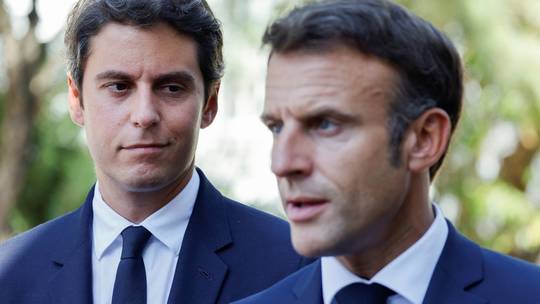
French Prime Minister Gabriel Attal appointed his spouse, Stephane Sejourne, as the new foreign minister on Thursday, marking a historic move just days after Attal became the first openly gay man to hold the position of Prime Minister in France.
Sejourne, who heads President Emmanuel Macron’s Renaissance political party and leads the Renew group in the European Parliament, has taken over the role from Catherine Colonna in the recent cabinet reshuffle prompted by former Prime Minister Elisabeth Borne’s resignation on Monday.
The 38-year-old Sejourne has been a key advisor to Macron since the latter’s tenure as Minister of the Economy and Finance, having joined his team in 2014 and continued to serve through Macron’s election to the presidency in 2017.
This significant appointment follows Macron’s decision to appoint Attal as the new Prime Minister on Tuesday, making him the youngest-ever prime minister in France and the first openly gay one. Attal, who previously served as the minister of education, publicly acknowledged his gay identity in 2018 and formalized his relationship with Sejourne through a civil union in 2017.
While the media has widely covered Attal’s historic appointment, there has been a notable avoidance of explicit mentions of Sejourne’s relationship with the Prime Minister in most news reports.
In addition to Sejourne’s appointment, other changes to Macron’s cabinet include the selection of former justice minister Rachida Dati as the new culture minister. Dati, a former MEP from the conservative Les Republicains party, has been under formal investigation for corruption since 2021, vehemently denying any wrongdoing. The investigation revolves around allegations that she received €900,000 for lobbying the European Parliament while still serving as an MEP.
Borne’s resignation, as indicated in her letter, suggests that she did not step down voluntarily but in accordance with Macron’s decision to appoint a new prime minister. This comes on the heels of the controversial immigration bill that Macron recently passed, strengthening the government’s authority to deport foreigners. Macron’s centrist party, having lost its parliamentary majority last year, formed an alliance with Les Republicains to pass the measure, further eroding public support and leading to a decline in government credibility.
The cabinet reshuffle on Thursday is widely perceived as a strategic move by President Macron to restore confidence in his government, especially as European Parliament elections loom later this year. With constitutional constraints preventing Macron from seeking a third term in 2027, the upcoming elections pose a crucial test for Renaissance, which is expected to face challenges unless there is a favorable shift in public opinion.